Our work
Before collecting a piece we carefully assess it to ensure that it is an authentic piece reflecting traditional Chinese culture and that there have been no recent repairs or alterations. We also undertake a structural examination so we can be confident that the frame and the major panels are fundamentally sound. We then consider the techniques necessary to bring each piece to a condition where it exhibits its history while still being able to serve as a lasting functional item. In essence our work is a synthesis of conservation and restoration.
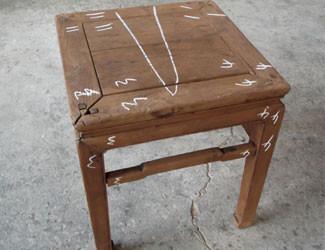
A feature of traditional Chinese furniture is the sophisticated joinery used in its construction. It is the joint that holds the piece together, animal hide glue was used for secondary support and metal studs were used only as decoration. The furniture is totally nail and screw free. However, over a long period of time the environmental changes in humidity and the movements in the timber result in the joint becoming loose. This allows dust and other small debris such as tiny insects into the joint with the result that the structural member becomes weak and ultimately the whole piece becomes unstable.
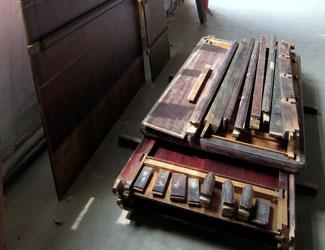
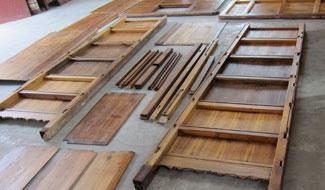
An interim measure, and one that we often see, is inserting additional wedges into the joint. This will stiffen the joint but is only a temporary fix, the underlying causes for the loss of integrity need to be addressed. A significant advantage of traditional Chinese cabinet making is that the furniture was made to be disassembled for maintenance and repair after many years of use. In the right hands this work can be undertaken while maintaining the structural integrity of the furniture.
Our cabinetmakers understand the techniques for construction and repair. They will examine a piece noting the types of joints used and decide where to commence disassembly. Each joint is then carefully cleaned. If a repair to the joint is necessary it is done in such a way as to restore the original strength of the joint and ensure the piece will continue to serve for many years to come.
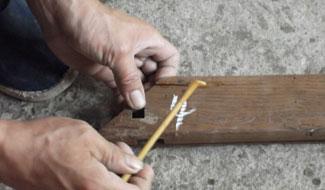
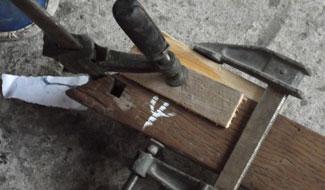
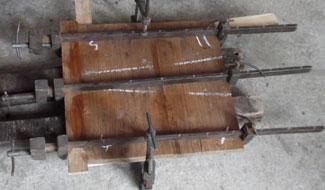
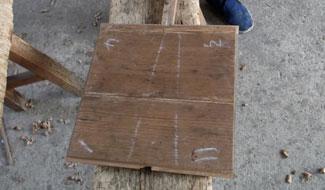
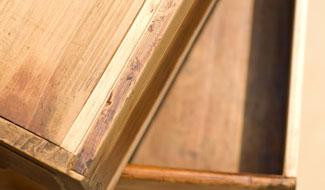
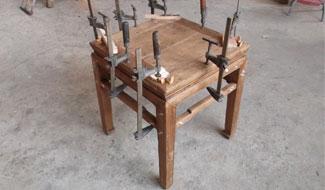
Timber expands and contracts in response to changes in the weather and this is more typically seen in the panels of the furniture. Early traditional cabinetmakers understood this and responded by having the edge or tongue of the panel sit in a groove of the frame without using glue. This allowed the panel to “float”, in other words expand and contract according to changes of temperature and humidity but without splitting. However, over a long period of time some panels do shrink to an extent that can lead to a gap between the panel and the frame. Careful cleaning, realigning the frame members and reseating the panel will often resolve this issue. Sometimes the shrinkage has gone too far. Under this circumstance we have to add a small strip of old timber to the panel. This can be seen on pieces such as the top of some tables that had relatively large panels more prone to shrinkage. We carefully match the timber and make sure that the tongue sits comfortably back into the groove of the frame. Most importantly the panel can again respond to the changes in temperature and humidity through natural expansion and contraction.
There are good reasons for ensuring that the tongue and groove elements of the furniture are in good order. Modern household heating and air-conditioning means that indoor living conditions are much drier than in the past. International transport by container is a part of the life of furniture in this changing world and is in stark contrast to the single environment from which the furniture originated. Temperatures inside the container can be extreme. A proper traditional tongue and groove construction will ensure the security of the panels within the frame as well as ensuring sufficient allowance for shrinkage or expansion under different conditions. This is vital to furniture’s well-being.
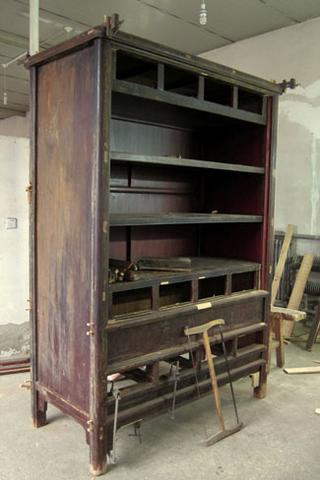
The other parts of furniture that typically need more frequent work are internal drawer members and shelves. They were the most used areas, often carrying excessive weight, and also were made using less sturdy timber than that employed on external surfaces and the frame. Where possible we preserve or repair these internal parts but in cases where they are missing, damaged beyond repair or otherwise in a condition that means they will not last, then the part is replaced.
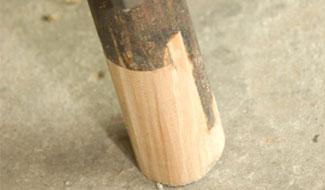
Most traditional Chinese homes had stone or earth floors that were often damp, especially in the colder months. This damp has the potential to rot the feet of furniture. The affected area can often be cleaned or repaired but sometimes the foot must be replaced. Rebuilding the foot preserves the original dimensions and perspective of the piece. Because the feet carry the entire weight of the furniture rebuilding the foot is not simply adding to its length. It is important to use a ‘locking joint’ method that connects the foot to the leg being careful to avoid other intersecting joint areas of the frame members.
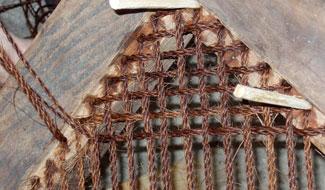
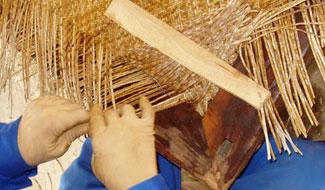
Some chairs and beds had a seat or mattress using a base of palm string and a top of fine cane that was woven to the frame. This was very comfortable especially in the hot and humid summer months as this material could breathe. Unfortunately these surfaces do wear and are more vulnerable to negligent treatment. With these pieces we undertake the repair according to the original construction as opposed to taking a shortcut of replacing the surface with board. Re-threading both the palm and cane strands into corresponding holes on the frame of the chair or bed is a highly skilled and time-consuming task. Each strand must be secured individually into each hole in a certain order with the right degree of tension and secured with bamboo pins.
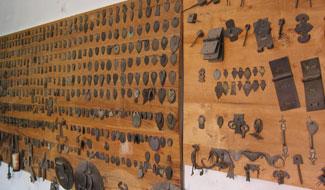
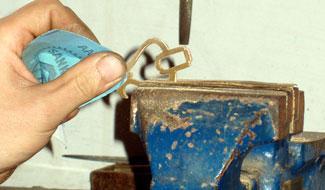
Many people will observe that the metal fittings on some furniture are newly made. The major reason for the lack of fittings (apart from wear) can be traced back to the Great Leap Forward of the late 1950s. At that time the government sought to match the steel production of western countries and hoped to achieve this by taking what ever metal was available and smelting it in small local furnaces. The efforts were fruitless and an unfortunate consequence was the loss of a certain amount of beautiful hardware from furniture. However, a surprisingly large amount of furniture has either the original metal fittings or an outline of the original is left on the furniture to create appropriate matching pieces. It is important to understand the history and style of the brass design from different regions of China. In our workshop we have collected samples of brass fittings from different periods and regions to provide a reference. All repairs are hand-done to the original style and thickness.
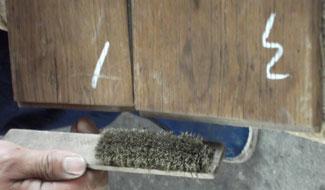
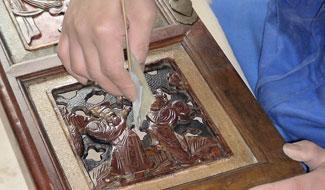
Once the cabinetmaker has completed his work, the piece then passes to the finishing area. This is another area that requires skill and patience. All internal and external surfaces are carefully cleaned. This is done in a way that preserves the original patina and finish. If a shelf or drawer liner has been replaced it is colour matched to the surrounding surfaces but otherwise left unmarked.
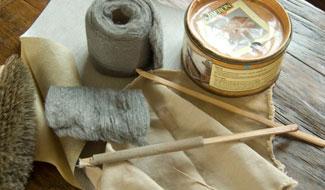
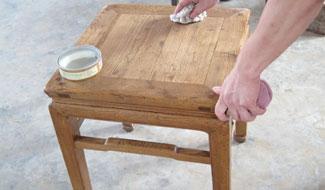
Finally a quality wax is applied. This adds a soft lustre to the furniture and has the piece ready so that it can be easily maintained by the owner.
This comprehensive restoration process is complex and time consuming. However, we believe it is the best way to treat old and antique pieces which have worn over time and so need a full restoration. The processes applied follow the traditions and intentions of the original cabinetmaker. Importantly the new owner can be confident of the long-term viability of the furniture and be able to easily maintain it themselves.