
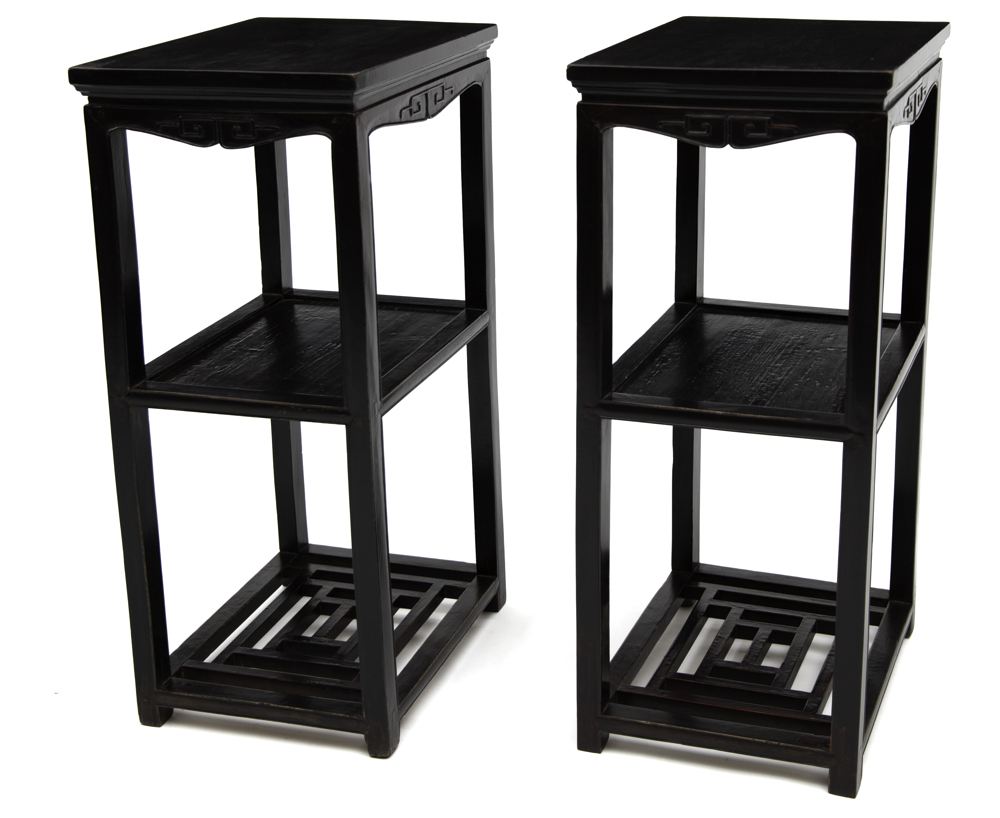
Black lacquered plant stands
$3,650.00
19th century
- walnut
- 47cm W x 34.5cm D x 82cm H
Price is for pair of stands
Graceful, vertical, and exquisitely balanced, this matched pair of 19th-century Chinese black lacquered stands reflects the refined aesthetic of late Qing dynasty interiors, where furniture was designed to bring the contemplative beauty of nature indoors.
History and Evolution in the Traditional Chinese Interior
Tall, slender stands—known historically as huaji (flower stands) or derived from the classical xiangji (incense stands)—occupy a unique place in Chinese domestic architecture:
From Ritual to Cultivated Leisure: During the Song and Ming dynasties, high stands were primarily used in scholar’s studios and formal reception halls to elevate incense burners, allowing fragrant smoke to disperse evenly at eye level. By the mid-to-late Qing dynasty, their role expanded into the display of prized penjing (miniature potted landscapes), seasonal blooms like orchids and chrysanthemums, scholar’s rocks, and fine porcelain.
Spatial Rhythm and Symmetry: In a traditional courtyard compound (siheyuan), rooms were arranged along strict axes of symmetry. Paired stands were placed flanking a large central painting, flanking a central altar table (tiaodu), or positioned symmetrically between armchairs to define vertical balance within high-ceilinged reception rooms.
Tiered Functionality: The multi-tier design—featuring a top display surface, a solid middle shelf, and an openwork lower base—allowed scholar-collectors to create dynamic, layered arrangements of books, decorative vessels, and floral accents without cluttering the main living space.
Motifs and Architectural Detail
Every structural element of these stands balances functional strength with auspicious symbolism:
Archaistic Apron Carving (Fanggu / Kui Dragon Fretwork): The graceful, cusped aprons beneath the top frame are carved in low relief with stylized, angular scrolling. These motifs derive from ancient bronze-age leiwen (thunder patterns) and stylized kui dragons. In the Qing dynasty, incorporating archaic bronze motifs into woodwork conveyed refined erudition, timeless continuity, and scholarly reverence for antiquity.
Geometric Lattice Shelf (Lingtian): The lowest tier features an openwork concentric geometric lattice. Beyond allowing light and air to circulate—preventing the visual heaviness often associated with solid base stretchers—the interlocking rectangular fretwork evokes the wan character and endless longevity scrolls.
Classic Humpback Lineage: The arching profile of the apron subtly mirrors the traditional “monk’s belly” or arched humpback stretcher, lending an airy, lifted posture to the square-section legs.
The Lacquer Finish
Finished in a deep, lustrous black lacquer, the surfaces display the soft patina and gentle craquelure earned through more than a century of care. The understated dark finish serves a practical artistic purpose: it provides a quiet, dignified contrast that allows the vibrant greens of foliage, the subtle tones of porcelain, or the rich patina of bronze to command attention.