The Evolution of Chinese Stools: From Ancient Times to Modern Versatility
Ancient Origins
The earliest evidence of Chinese stools dates back to the Eastern Zhou period (770-221 B.C.E.), with an engraving of a stool on a bronze vessel. However, it wasn’t until the 2nd century C.E. that written records of seats emerged, specifically mentioning folding stools as symbols of high status in a culture where people mostly sat on mats.
Rise to Prominence
By the 12th century, raised seating became the norm in Chinese society. The type of seat reflected social position, chairs reserved for senior members and stools for more junior household members. If chairs were unavailable the stool transformed into a seat of honour while others stood.
Design and Construction
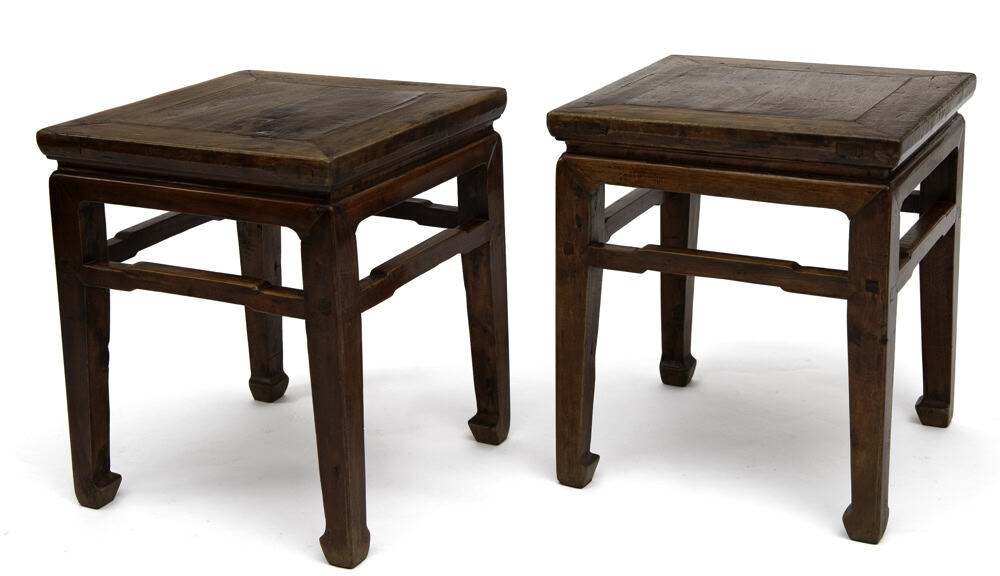
Chinese stools were designed with practicality in mind, featuring sturdy weight-bearing construction using mortise and tenon joints. They also incorporate a transverse brace under the seat for additional strength. This robust design allowed for both portability and durability. Learn more about Chinese joinery here.
Modern Relevance
The timeless functionality of antique Chinese stools remains relevant today. Their generous size makes them excellent:
Lounge room side tables
Bedside tables
Impromptu coffee tables
Additional seating
A very solid pair of antique Chinese stools. The humpback stretchers are called a bridge stretcher in Chinese evoking a sense of coming together, the legs end in inward horse hoof feet.