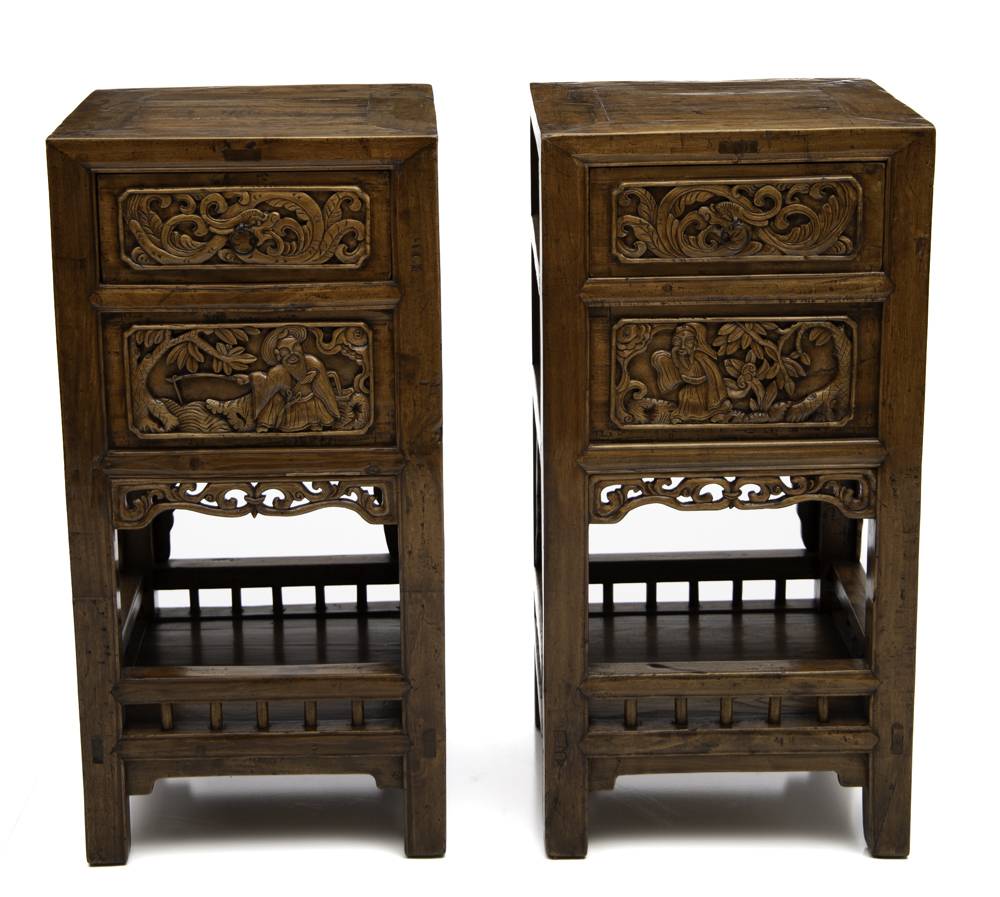
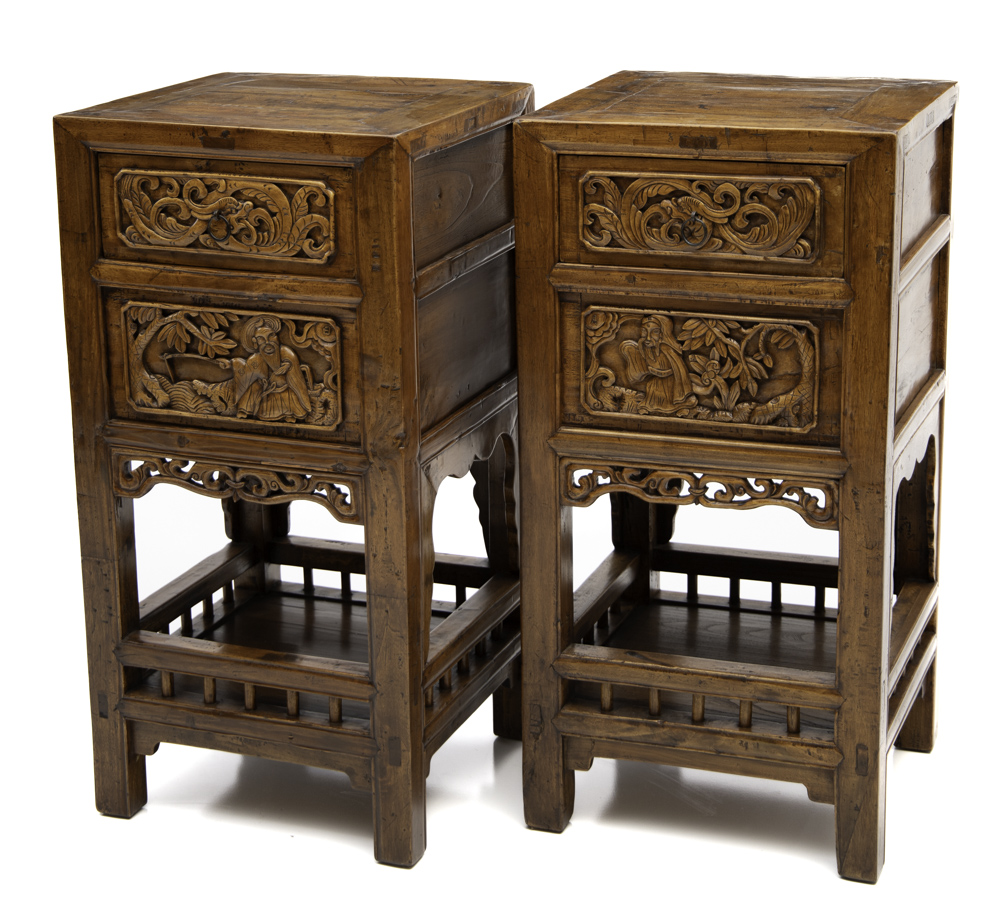
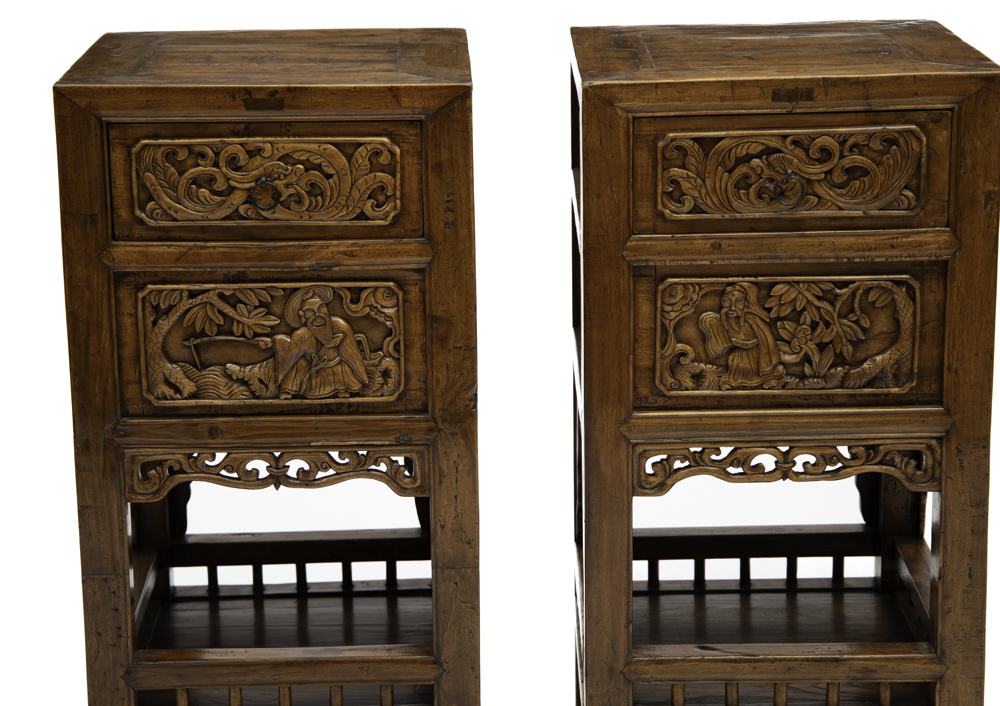
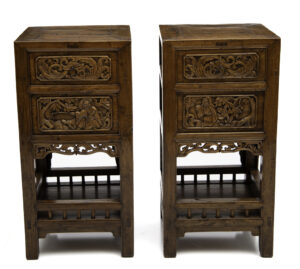
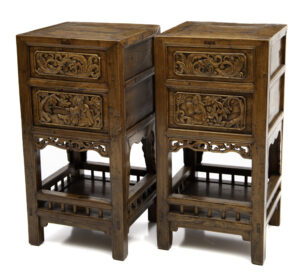
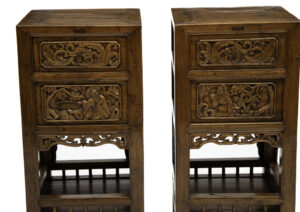
These antique Chinese tea stands, often referred to as Chaji (tea tables), represent a specialized evolution of Chinese furniture that flourished during the Qing Dynasty (1644–1912). While tea culture in China dates back to the Han Dynasty, the specific form of the high, narrow side table seen here is a relatively late addition to the Chinese interior, reflecting shifts in both social rituals and architecture.
History and Evolution
The evolution of the tea stand is closely tied to the transition from floor-sitting culture to chair-sitting culture in China.
Ancient Ritual Roots: Early “stands” originated as ritual platforms (such as the zu or jin) used for offerings of meat or incense during the Shang and Zhou dynasties.
The Shift to Tea: During the Tang and Song dynasties, tea was primarily prepared on low platforms or stools. As the Gongfu tea ceremony gained prominence, particularly in the Fujian and Guangdong regions, the need for dedicated surfaces to manage water spillage and house intricate tools became paramount.
The Rise of the Chaji: By the late Ming and early Qing dynasties, the Chaji emerged as a distinct furniture piece. Unlike earlier incense stands, which were often solitary, Chaji were typically designed in pairs to be placed between two formal armchairs in a reception hall, facilitating conversation and hospitality.
Construction and Material
Functional Design: These stands feature a top drawer and a middle relief-carved panel, a configuration designed for the organized storage of tea leaves, brushes, and small utensils.
Spindle Rails: The lower shelf is enclosed by a decorative spindle railing (sometimes called a “fence” or “comb” gallery). This design element provides structural stability while allowing the piece to feel light and airy—a style often associated with bamboo-inspired hardwood furniture.
Joinery: The pieces utilize traditional mortise and tenon joinery, which allows the wood to expand and contract without the need for nails or glue, ensuring longevity across centuries.
Carving and Symbolism
The central panels are the focal point of these stands, featuring deep relief carvings that carry significant cultural weight.
Figural Scenes: The carvings depict immortals or scholarly figures in a natural landscape, a theme rooted in Daoist principles of harmony and the pursuit of a refined, contemplative life.
Auspicious Motifs: The presence of pine trees (symbolizing longevity) and rockeries (representing permanence) suggests these were intended for a household that valued stability and health.
Narrative Element: Such scenes often reference specific folklore, like the “Eight Immortals,” serving as a constant reminder of spiritual and moral aspirations during the act of drinking tea.
One stand has the character for moon while the other has the character for sun. At its most essential level, the sun and moon represent the Yin and Yang philosophy—the idea that the universe is governed by two opposing but complementary forces.
One of the most clever aspects of this pairing is linguistic. When the characters for sun and moon are placed side-by-side, they form the character Ming (明). This character translates to “bright,” “clear,” or “enlightened”. It suggests clarity of thought and moral transparency. In the context of the immortal carvings this “Brightness” represents the spiritual illumination or wisdom achieved by the sages depicted.