The chest was the first form of storage with its origins as small boxes going back over 2,000 years. The basic form of the chest appears to have continued until the advent of the chair and a more sophisticated mode of living, perhaps around the Song dynasty (960A.D. – 1279A.D.). With the addition of doors and then feet, chests evolved to cabinets and reflected a different way of storing articles.
Chests came in a wide variety of sizes depending on the purpose for which they were to be used. Smaller chests were made to hold personal items. Larger chests were primarily used for storing quilts and clothing. Many were carved, lacquered or painted to enhance the beauty of the piece and to protect the timber.
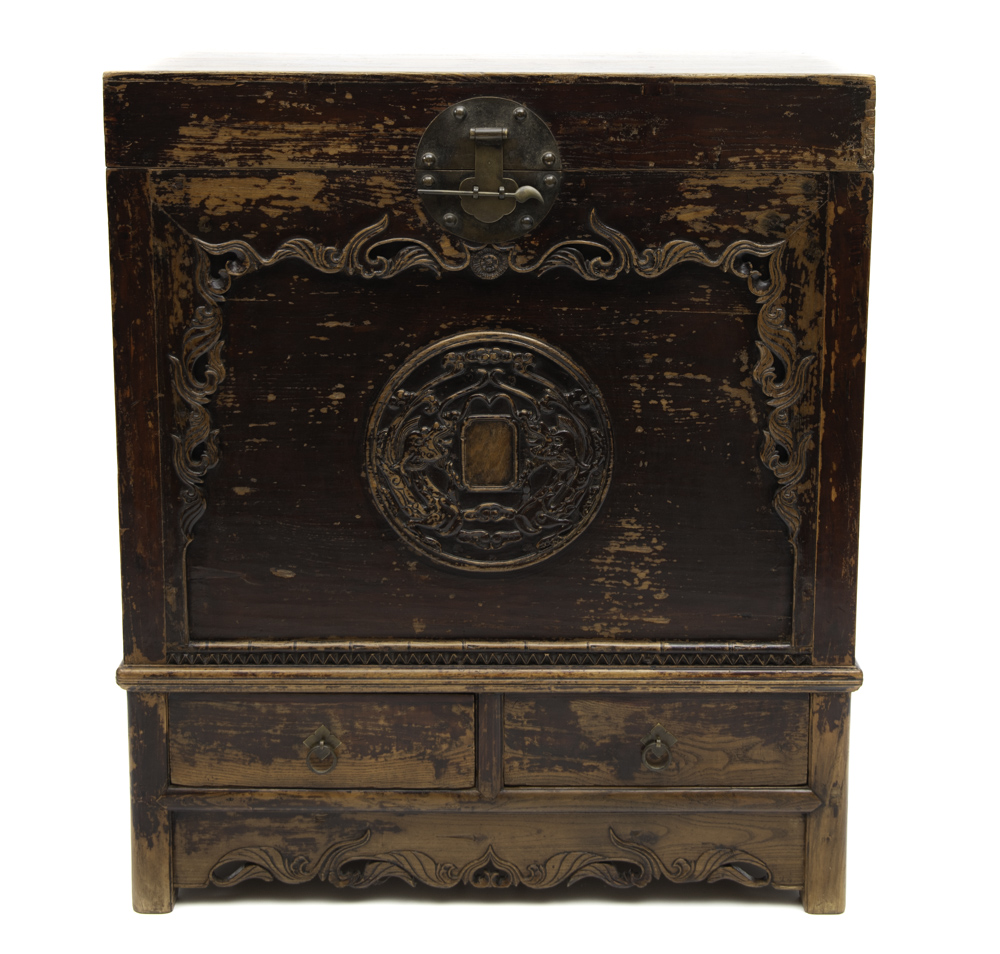
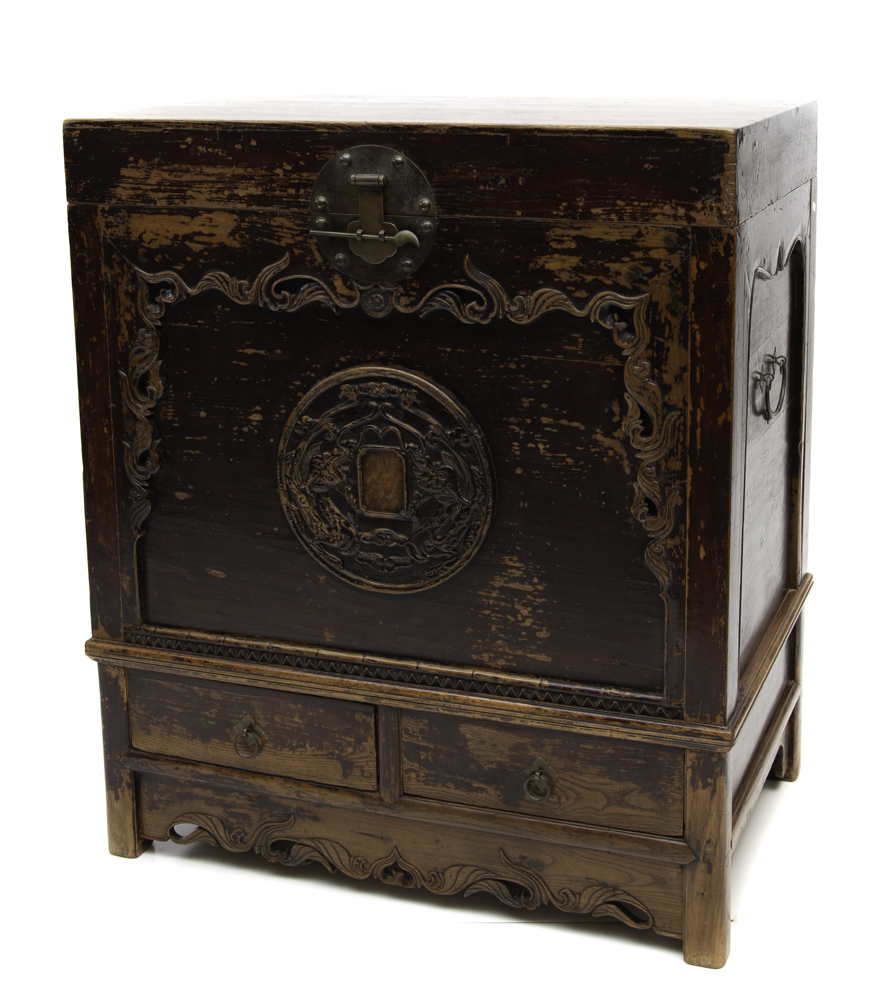
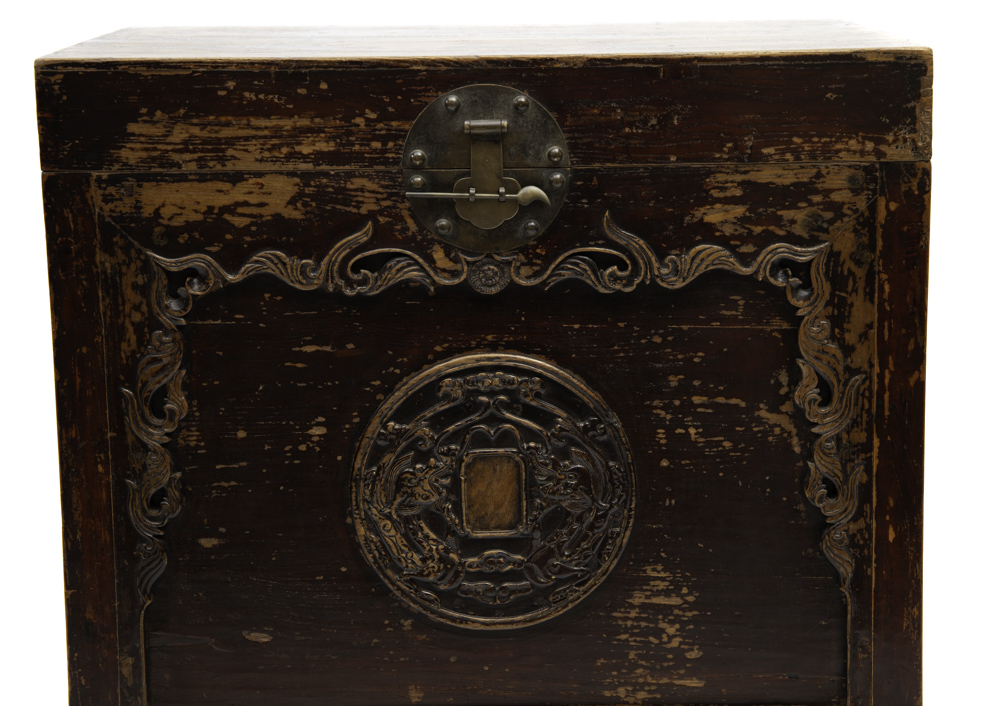
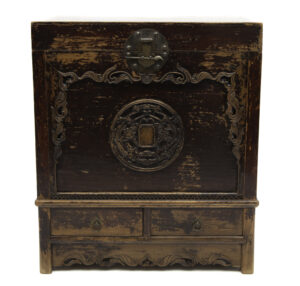
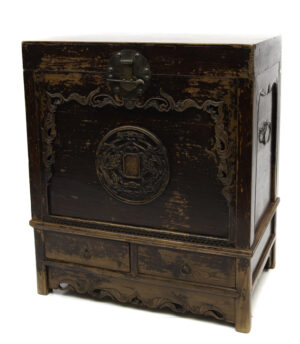
This is a most unusual chest in that it comes with built-in drawers. The chest compartment is a large space perfect for storing blankets, quilts and doonas. The drawers are large and can store smaller items easily. It has dragon carving on the front, symbol of strength and authority. The chest has a rich plum red lacquer. Lacquer was invented in China approx. 8000 years ago and is sourced from a few species of trees native to China. Producing lacquer was an expensive and time-consuming process. It was applied to preserve the timber and enhance the aesthetic appeal of the furniture.
Each piece of furniture has been collected with an eye to authenticity. It then undergoes a thorough process of conservation and restoration meaning retaining as much as possible of the original components while restoring its original function so that it will serve for generations to come. See more here.